menstrual awareness and Cycle literacy School
A Better way to understand women’s rhythm

For generations, men have been left outside conversations about menstruation and the reality of women's cyclicity. Mood Flow School fills this gap by bringing science-backed curriculum to the public, improving the public's menstrual awareness and helping you understand women’s cyclicity — the natural rhythm of physical, emotional, and behavioral changes across the menstrual cycle in a stigma- and myth-free way.
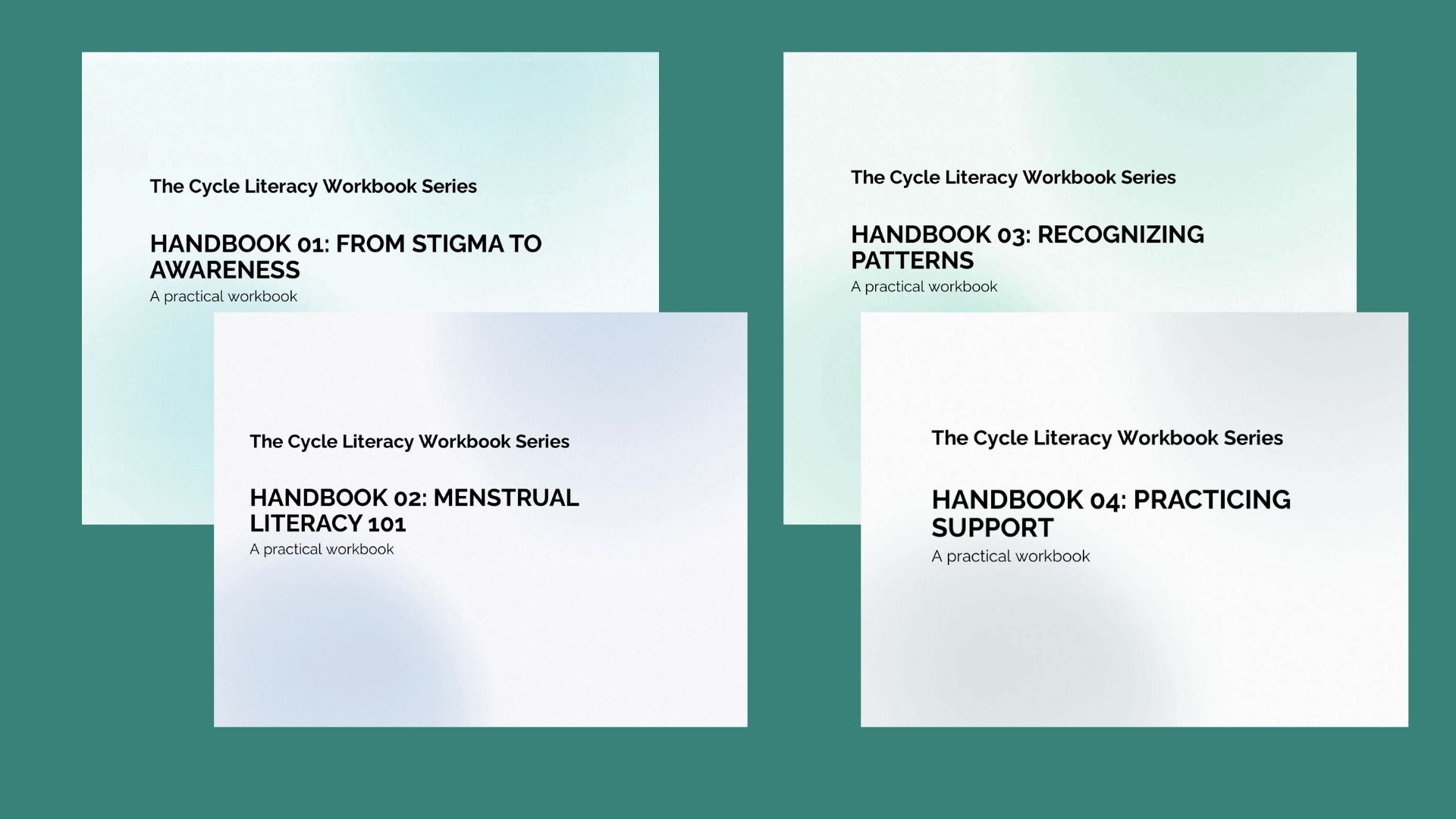
Start with Cycle Literacy Workbook Series
Build menstrual awareness and cycle literacy from the ground up with four practical workbooks. Suitable for partners, husbands, fathers, and everyone who wants to understand women better. Download, print, and start learning.
What you will learn:
recognize what you were taught about women's experiences and the cycle
understand the basics of the menstrual cycle, phases, PMS, and PMDD
recognize recurring patterns without stereotypes
communicate better about periods, cycles, moods, energy, and changing needs
develop greater empathy and emotional awareness, and
turn new understanding into practical support, improving your relationships
- Free
Glossary of Cyclical Concepts
- Download
- $17.99
Handbook 01: From Stigma to Awareness
- Download
- $17.99
Handbook 02: Menstrual Literacy 101
- Download
free resources
Why Cycle Literacy and Menstrual Awareness?
our philosophy
Every day, women in your close circle or at work are at some point in their cycle. We rarely think and talk about it, and not because it does not matter. Knowing where a woman is in her cycle can give plenty of information on where she is emotionally, physically, and even socially; what her superpowers are; where she might need support; and, most importantly, what to anticipate next.
It benefits personal relationships, teams, and women's circles.
Mood Flow School believes that this knowledge is important for both men and women, individually and as a society. That is why we develop curriculum suitable for HR, retreats etc. to make these conversations easier — without shame, stereotypes, or the expectation that you should've known it already.
We offer a learning process that helps students understand more, assume less, and support better. LEARN MORE